
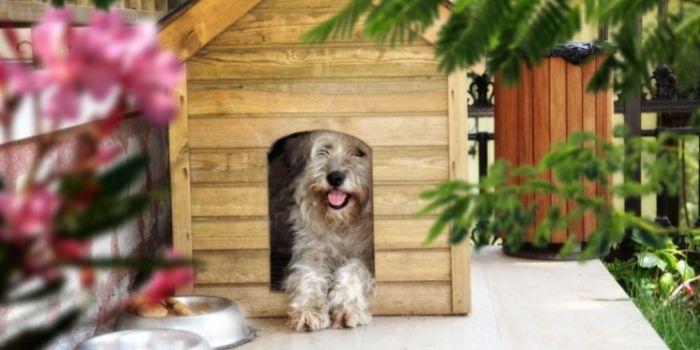
If you share your home with a dog, you already know one thing — they don’t just live in a space, they lick it, scratch it, chew it, nap on it, and claim it as their kingdom.
So when it comes to painting a wooden dog kennel, this isn’t just a décor decision — it’s a health decision.
The wrong paint can release harsh VOCs, chip into toxic flakes, or irritate your pet’s sensitive nose and skin.
The right paint, however, protects the wood from moisture, sun, and wear while staying completely safe for curious snouts and occasional chew attempts.
That balance between durability and safety is where smart choices matter most.
In this guide to the 5 best pet-safe paints for a wooden dog kennel, I will focus on low-VOC, non-toxic, and durable options that stand up to weather and wagging tails alike.
Because your dog’s kennel shouldn’t just look good — it should be as safe and dependable as the companion sleeping inside it.
5 Best Pet Safe Paints for Wood
As a responsible pet parent, safety isn’t optional — it’s instinct. From the food bowl to the flooring, everything your dog interacts with should be free from harmful chemicals.
And since dogs often lick, chew, and rest against their kennel walls, choosing a pet-safe paint for wood becomes especially important.
The ideal paint should be low in VOCs, non-toxic once cured, durable against scratches and weather, and safe for indoor air quality.
Here are five reliable pet-friendly paint options you can consider for your wooden dog kennel:
1- ECOS Paint
ECOS Paints is widely known for its commitment to non-toxic formulations. Instead of petroleum-based solvents, it uses water-based ingredients and is virtually odor-free.
The paint contains zero or ultra-low VOCs, which means it won’t release harmful fumes that could irritate your dog’s sensitive respiratory system.
It’s a strong choice for indoor kennels or freshly painted outdoor houses where airflow may be limited during drying. Once cured, it forms a durable finish that resists chipping and moisture damage.
2- Sherwin-Williams Harmony
Sherwin-Williams Harmony is a zero-VOC interior paint specifically designed to improve indoor air quality.
It not only reduces emissions but also helps neutralize common household odors — a bonus in pet areas.
The finish is washable and fairly durable, making it suitable for dog houses placed in covered patios or garages. If you’re concerned about long-term air safety and easy maintenance, this is a dependable option.
3- Chalk Paint by Annie Sloan
If aesthetics matter to you and you want a rustic or distressed look for your dog’s kennel, Annie Sloan’s Chalk Paint is a popular decorative choice. It’s water-based and low in VOCs, making it safe once fully cured.
Chalk paint adheres well to wood without heavy sanding and provides a soft matte finish. For outdoor use, however, you’ll need to seal your chalk paint coating properly with a pet-safe topcoat to ensure durability against moisture and wear.
4- Milk Paint by The Real Milk Paint Co.
Despite its name, milk paint isn’t dairy-based in the traditional sense — it’s made from natural ingredients like milk protein (casein), lime, and earth pigments. This makes it biodegradable and extremely low in toxins.
It’s ideal for pet owners who prefer completely natural solutions. The finish is breathable and eco-friendly, but for outdoor dog kennels, sealing it with a safe protective layer will improve longevity.
5- Rust-Oleum Non-toxic Latex Exterior Spray Paint
If convenience and a smooth, even finish are priorities, Rust-Oleum’s non-toxic latex spray options are worth considering. Being water-based, they emit fewer fumes compared to oil-based alternatives and are safe once cured.
Spray paints help you achieve professional-looking coverage on dog crates or detailed kennel surfaces.
Just make sure to apply it in a well-ventilated area and allow complete curing time before letting your pet near it.
Choosing the Right Paint for Your Dog House
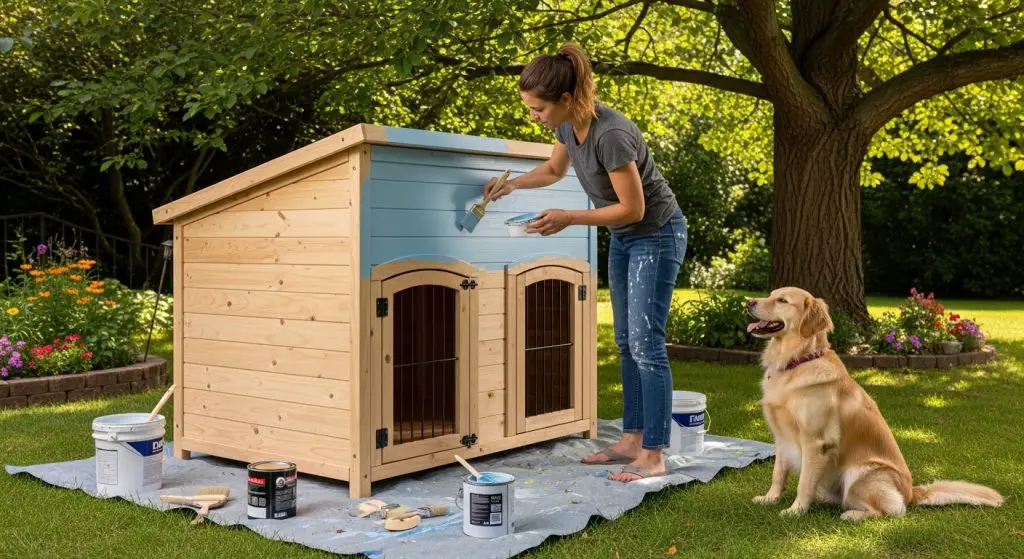
One of the most important things to consider when painting your wooden dog kennel is the type of paint you use.
Not only should it withstand the elements, but it should be durable and safe for your furry friend – the last thing you want is for your dog to get sick from licking the paint off their kennel.
While Real Milk is also my favorite, I ended up choosing to use latex exterior paint for my wooden dog kennel.
I liked that it was durable and could withstand the weather. I also felt confident that it was safe for my dog since it is commonly used on children’s toys.
If you decide to use a different type of paint, just do your research to ensure it is safe for your pet and will withstand the elements.
What paints and finishes should you not use for your pet house?
You should not use any paints or finishes that contain lead. Lead is hazardous for humans and animals and can cause serious health problems.
It’s also good to avoid paints with ingredients:
- Ammonia
- Acetone
- Biocides
- Formaldehyde
- Fungicides
Solvent-based finishes such as polyurethane, varnish, lacquer, etc., also contain ingredients that can be harmful to both humans and animals, so it’s best to avoid them if possible.
If you must use a solvent-based finish, ventilate the area well and keep your pets out of the room until the finish is completely dry.
Also, choose paints or finishes that contain low or no volatile organic compounds (VOCs), which can be harmful to both humans and animals and can cause respiratory problems.
If unsure if the paint or finish contains lead or VOCs, you can check the label or contact the manufacturer. When in doubt, avoiding caution and choosing a different product is always better.

What Color Should You Paint Your Wooden Dog Kennel?
Once you’ve decided on the type of paint you will use, it’s time to choose a color.
If you’re painting the outside of your dog’s kennel, you’ll want to choose a color that compliments your home. You don’t want it to stick out like a sore thumb.
I ended up choosing a light blue color for my dog house because I thought it would look cute against my brick home and wouldn’t get too hot in the summer sun.
If you’re painting the inside of your dog’s kennel, you can choose any color you want.
Your pup doesn’t care what color their house is as long as they have a comfy place to sleep.
I chose to paint the inside of my dog’s kennel white so it would be easy to clean.
Deciding on a Type of Finish
After you’ve chosen the paint color, you’ll need to decide on the type of finish you want.
There are two main types of paint finishes: glossy and matte.
Glossy finishes are more durable and easier to clean, but they can also show scratches more easily. Matte finishes, on the other hand, are less durable but can help hide imperfections.
I decided to go with a glossy finish for my dog’s kennel since I wanted it to be easy to clean.
You May Ask What about Satin, Eggshell, or Semi-Gloss?
Satin, eggshell, and semi-gloss are all types of finishes that fall somewhere between glossy and matte.
They’re more durable than matte finishes but not as durable as glossy finishes.
They’re also easier to clean than matte finishes but not as easy to clean as glossy finishes.
I recommend using satin, eggshell, or semi-gloss if you didn’t decide between a glossy or matte finish. It’s really up to you.
How to Paint Your Dog House – Tips for Long-Lasting Results?
Once you’ve selected a pet-safe paint and the perfect color, proper preparation and application are what truly determine how long your dog house will last.
A rushed paint job may look good for a few weeks — but good prep and technique can protect the kennel for years.
Whether your dog house is made from traditional hardwood, plywood, or even eco-friendly materials like bamboo, the right process makes all the difference.
Here’s a step-by-step approach for durable, professional-looking results:
1. Start with a thorough cleaning
Before opening a paint can, clean the entire surface of the dog house. Remove dirt, dust, mud splashes, loose wood fibers, and cobwebs. If the kennel has been outdoors, wipe it down with mild soap and water to eliminate grime and oils.
Allow the wood to dry completely — painting over damp wood can cause peeling, bubbling, and mold growth later.
2. Sand for better adhesion
Lightly sand the surface using fine- or medium-grit sandpaper. This removes old flaking paint and smooths rough patches while helping the new paint adhere better.
After sanding, wipe the surface again with a dry cloth to remove dust particles. Clean, smooth wood ensures an even and long-lasting finish.
3. Apply a quality primer
Primer is often overlooked, but it’s essential — especially for bare or previously stained wood. A good primer seals the wood, prevents moisture absorption, and helps the topcoat bond properly.
Use a pet-safe, low-VOC primer and apply an even coat. Let it dry fully according to the manufacturer’s instructions before moving to the next step.
4. Apply paint evenly
Use a high-quality brush for corners and detailed areas, and a small roller for flat surfaces. Apply thin, even coats rather than one thick layer. Thick coats take longer to dry and are more prone to cracking.
Be sure to reach all edges, joints, and small crevices — these areas are most vulnerable to moisture damage.
If you’re using chalk paint or lighter colors, you may need two to three coats for full coverage. Always allow proper drying time between coats.
5. Seal for extra protection (especially outdoors)
For outdoor dog houses, consider applying a pet-safe, water-based sealant after the paint has fully dried. This adds an extra barrier against rain, sun exposure, scratches, and daily wear.
Make sure the sealant is fully cured before your dog returns to the kennel.
6. Let it cure completely
Drying and curing are not the same. Even if paint feels dry to the touch, it may still release mild fumes. Allow several days of ventilation before letting your dog use the house. This step is crucial for your pet’s safety.
7. Add personal finishing touches
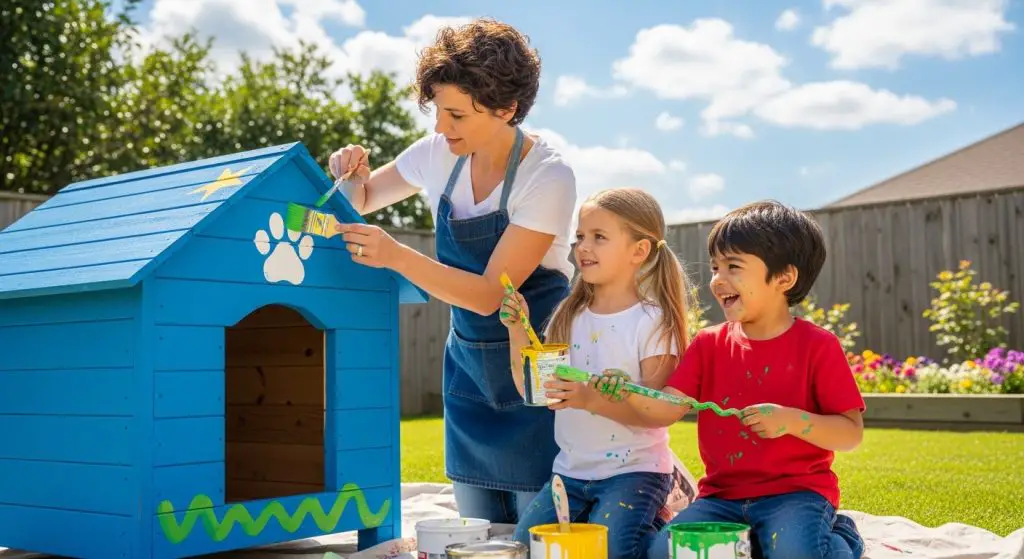
Once everything is fully cured, you can get creative. Paint your dog’s name above the entrance, add paw-print stencils, or keep it minimalist and classic. Decorative touches are optional — durability and safety come first.
How to Keep Your Pet Cats & Dogs Safe While Painting Their House?
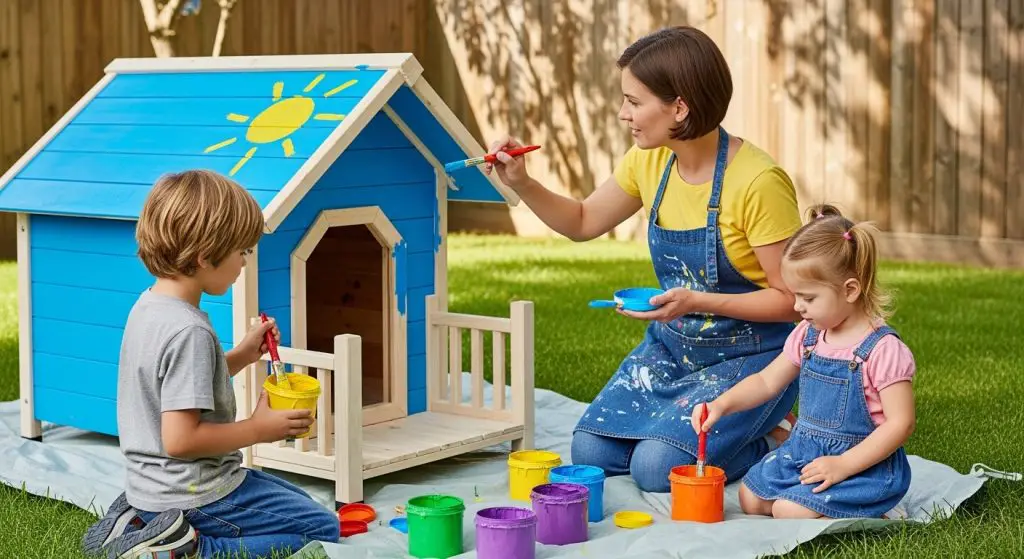
If you have any pets, ensure they’re safe while painting – do not make them get sick from the paint fumes just because you are careless.
Here are some tips for keeping your pets safe while painting…
1- If possible, arrange for someone to watch your pet while you’re painting.
2- If you can’t find someone to watch your pet, put them in a room far away from where you’ll be painting.
3- Close all the doors and windows in the room where you’re painting to keep the fumes from getting out.
4- Open the windows in the room where your pet is to let fresh air in.
5- If using chalk paint, ensure it’s completely dry before letting your pet back in the room.
6- Clean up any paint drips or spills immediately and wash your hands thoroughly after painting.
7- Keep all paints and paint thinners out of reach of your pets.
Following these tips will help you keep your furry friend safe while you’re painting their dog house.
FAQs
Can I paint my cat’s house?
Yes, you can paint your cat’s house. Just follow the same steps as you would for painting a dog house.
Also, make sure you use pet-safe paint if your cat will be spending any time in the house while it’s still drying.
What if your dog or cat eats paint?
If your pet ingests paint, it’s essential to seek medical attention immediately. Ingesting paint can be hazardous and even fatal for pets.
Call your veterinarian or the ASPCA Animal Poison Control Center if you think your pet has eaten paint. Do not try to make your pet vomit unless you are instructed to do so by a medical professional.
What if your pet gets paint on their fur or skin?
If your pet gets paint on their fur, skin, or paws, it’s important to remove it as soon as possible. Paint can be very dangerous for pets if ingested and can cause skin irritations.
To remove paint from your pet’s fur, start by using a damp cloth to wipe away as much of the paint as possible.
Then, use a pet-safe shampoo to wash your pet’s fur. If the paint doesn’t come off with shampoo, you may need to take your pet to a groomer.
Final Thoughts
A well-painted dog house is more than a cosmetic upgrade — it’s a layer of protection for both the wood and your pet.
Choosing a non-toxic, low-VOC paint is the first step, but proper preparation, thin even coats, and adequate curing time are what truly ensure long-lasting results.
Think of it as an investment in durability and safety. A carefully painted kennel resists moisture, sun damage, scratches, and daily wear while keeping harmful fumes away from your dog’s sensitive nose and skin.
Share the post "5 Best Pet Safe Paints for a Wooden Dog Kennel"

We are constantly finding new ways to update our home exteriors. If you are a bit tight on budget, renovating Read more

Cypress wood has been used for thousands of years in shipbuilding, so it is well-known for its water-resistance properties. Due Read more
We all know - Heat is the enemy of wood. When you place a hot item on a wooden surface Read more
If you are looking to upgrade your dining room but are on a budget, then painting your oak table and Read more
Hi, I am Mark Garner a professional carpenter, woodworker, and DIY painter. I live in the small city of Peoria, Arizona as a semi-retired woodworker. I have started this blog with a simple motive to help you with my wood experience in this sector. If you like to know more about what I love doing and how it all got started, you can check more about me here.