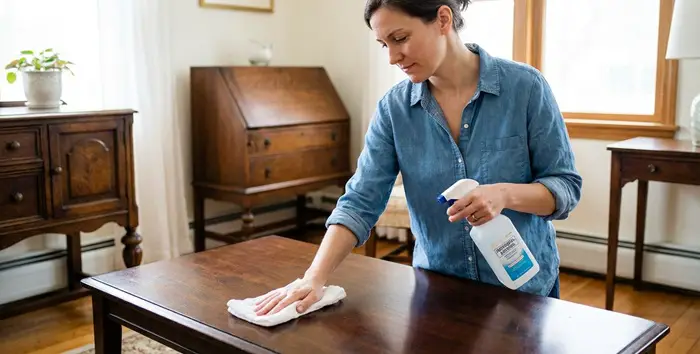
Let’s set the scene: You’re hosting a dinner party, the wine is flowing, and suddenly a rogue permanent marker or blob of mystery adhesive lands on your heirloom oak table.
Your first instinct is to grab the bottle of 70% isopropyl alcohol from the medicine cabinet—the Swiss Army knife of cleaners that kills germs, dissolves gunk, and evaporates in seconds.
But before you tilt that bottle over your prized wood, pause.
Using isopropyl alcohol on wood is a bit like using a pressure washer on a Fabergé egg—it might remove the mess, but you probably won’t like what’s left behind.
Let’s look at why this common cleaner and wood finishes often don’t mix.
Can I Use Isopropyl Alcohol on Wood?
Yes, you can, but you almost certainly shouldn’t.
Technically, wood is a resilient cellular structure. The alcohol itself isn’t going to make the wood fibers spontaneously combust or dissolve into mush.
The real victim here isn’t the wood; it’s the finish. Whether your furniture is coated in lacquer, varnish, shellac, or polyurethane, isopropyl alcohol is chemically designed to be a solvent.
Most wood finishes are “organic films.” Isopropyl alcohol (C3H8O) is a polar solvent. Many traditional wood finishes, particularly shellac, are also polar. In the world of chemistry, “like dissolves like.”
When you apply rubbing alcohol on wood furniture, you aren’t just cleaning the surface; you are re-solvating the protective coating.
Shellac: This is the biggest “no-go.” Shellac is literally thinned with alcohol. Applying isopropyl will turn your beautiful finish into a sticky, gooey mess in seconds.
Varnish and Lacquer: These are more durable, but isopropyl can still cause “blushing” (white cloudy spots) by trapping moisture or partially dissolving the top layer.
Polyurethane: While “poly” is the tank of the wood-finish world, repeated exposure to high-concentration alcohol will eventually cause it to swell, crack, or lose its luster.
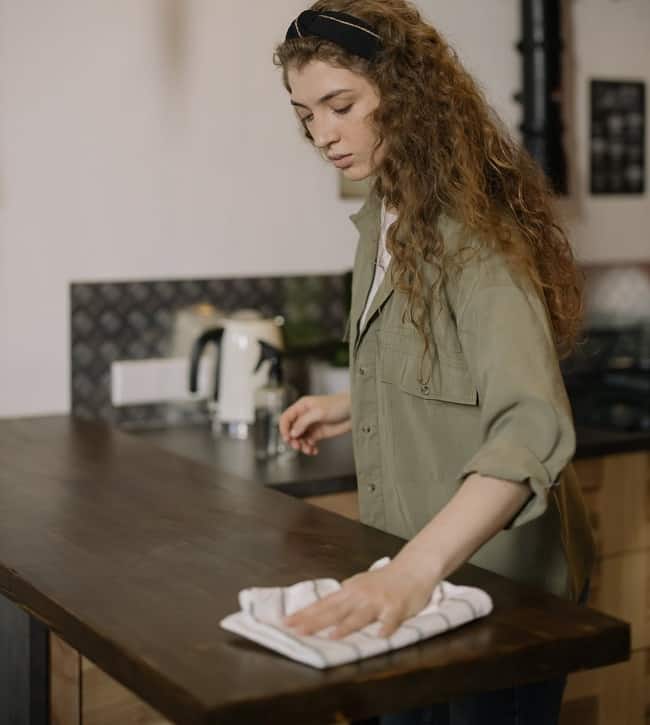
Will Rubbing Alcohol Damage Wood Furniture?
If you were looking for a way to remove varnish with rubbing alcohol, then congratulations—you’ve found a very inefficient and messy paint stripper.
However, if you were trying to sanitize your coffee table or trying to remove liquor stains, we have a problem.
1. The dreaded white ring
Alcohol is hygroscopic, meaning it attracts water. When it sits on a wood finish, it can pull moisture into the upper layers of the coating.
This creates microscopic pockets of air and water that refract light differently, appearing as a hazy white mark.
2. De-glossing
Even if you don’t see a white stain, alcohol is excellent at stripping away the natural oils and waxes that give wood its “glow.”
You’ll likely be left with a dull, matte patch that looks like the wood has been “parched.”
3. Cracking and checking
Because alcohol evaporates so rapidly, it can cause localized “thermal shock” and rapid dehydration of the wood’s surface cells if the finish is thin.
Over time, this leads to “checking”—tiny cracks in the finish that allow moisture to seep into the wood itself, eventually causing rot or warping.
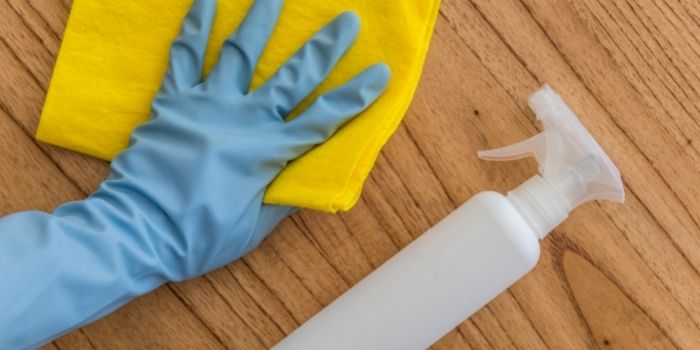
How to Prevent the Damage Caused by Rubbing Alcohol?
If you’ve already had a “Whoops” moment, or if you absolutely must use a solvent for a specific repair, here is how you manage the risk.
The “Test Patch”
- Never, under any circumstances, wipe down the center of a piece of furniture first.
- Find a spot that faces the wall or the underside of a leg.
- Apply a tiny drop of alcohol and wait 5 minutes.
- If the finish feels tacky or soft, put the bottle away immediately.
Dilution is Your Friend
If you are trying to remove a stubborn ink stain, don’t use 91% or 99% isopropyl.
Dilute it to a 50/50 mix with distilled water. This slows the evaporation rate and lessens the “bite” on the finish.
The “Dab, Don’t Rub” Rule
If you must use it:
- Apply the alcohol to a microfiber cloth, not the wood.
- Dab the specific spot (like a permanent marker line).
- Immediately follow up with a damp cloth (water only) to neutralize the area.
- Dry it instantly with a third cloth.
If you’ve already caused a white spot, you can sometimes “melt” the finish back into place using a specialized “blush remover” spray, or by very carefully applying a bit of furniture wax and buffing with fine steel wool (0000 grade) to blend the edges.
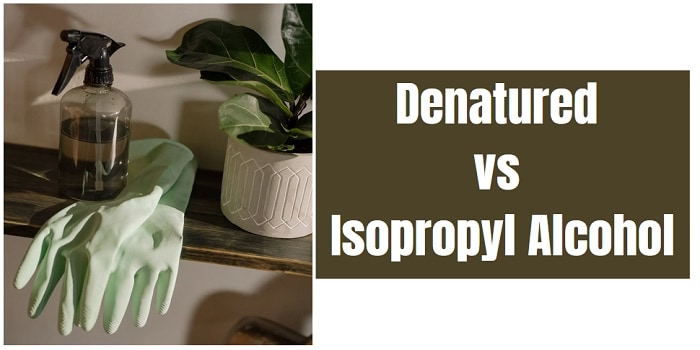
Denatured vs. Isopropyl Alcohol – Which is Safer for Cleaning Wood Furniture?
In the world of woodworking, you’ll often see pros reaching for a tin of denatured alcohol for cleaning wood.
This leads many DIYers to think they can use isopropyl alcohol instead of denatured alcohol interchangeably.
But let’s clear it – They are different beasts.
| Feature | Isopropyl Alcohol (Rubbing) | Denatured Alcohol (Ethyl + Additives) |
| Chemical Formula | C3H8O | C2H6O (plus toxins) |
| Evaporation Rate | Moderate to Fast | Extremely Fast |
| Water Content | High (usually 30% to 10%) | Very Low |
| Primary Use in Wood | Disinfecting, light cleaning | Thinning shellac, removing dyes |
| Risk to Finish | High (Causes clouding) | Extreme (Dissolves shellac) |
While denatured alcohol for cleaning wood is a standard tool for tasks such as removing sawdust or prepping raw lumber for a finish, it is actually more aggressive than isopropyl.
However, it’s often preferred by pros because it leaves zero residue and contains less water.
Neither is “safe” for a finished piece of furniture, but if you are working on raw wood and need to check the grain or remove oil, denatured alcohol is the industry standard.
TIP: If you are trying to mix isopropyl alcohol and denatured alcohol, stop.
There is rarely a chemical reason to do this for home maintenance, and you’re just creating a cocktail that is unpredictable on wood finishes.
Related FAQs:
Does alcohol affect the color of the wood?
Yes. If the wood was treated with alcohol-based dyes, the isopropyl will reactivate those dyes, causing the color to bleed or smudge.
This is especially common in mid-century modern furniture or high-end custom pieces.
Can I use alcohol on outdoor wood furniture?
Outdoor furniture is often treated with teak oil or heavy-duty UV sealants. While it’s slightly more rugged, alcohol will still strip those protective oils.
You’re better off using a dedicated deck cleaner or a mild oxygen bleach solution.
Can I use alcohol wipes to disinfect my wood table?
I wouldn’t recommend it. Most disinfecting wipes contain high concentrations of alcohol or bleach.
If used daily, they will eventually eat through the topcoat, leaving the wood vulnerable to water damage and staining. Stick to a damp cloth with a drop of mild dish soap.
For 99% of wood furniture, a microfiber cloth lightly dampened with water and a pH-neutral soap is the gold standard.
For deeper cleans, look for products specifically labeled as “Wood Cleaners” that contain conditioning oils.
Final Thoughts
At the end of the day, wood is an organic, “breathing” material that we’ve essentially plastic-wrapped in finish to keep it beautiful.
Isopropyl alcohol is the enemy of that “plastic wrap.” While it’s tempting to use the strongest cleaner in the house to ensure things are germ-free, wood furniture requires a gentler touch.
Save the isopropyl for your electronics and your scrapes. If you’ve got a stubborn stain on your favorite table, take a breath, put the bottle down, and reach for the mild soap or a dedicated furniture polish.
Share the post "Isopropyl Alcohol on Wood Furniture – Is it Safe?"

Termites are recognized as one of the most troublesome pests all over the world. They are small and numerous and Read more
Our bedroom is a special place where we find relaxation and refresh after a hard day of toil - the Read more
Let’s be honest: buying a sofa is a bit like dating. In the beginning, it’s all about the looks. You Read more
Wooden furniture, trims, doors, and windows are so long-lasting that you can easily repair and reuse them even after they Read more
Hi, I am Mark Garner a professional carpenter, woodworker, and DIY painter. I live in the small city of Peoria, Arizona as a semi-retired woodworker. I have started this blog with a simple motive to help you with my wood experience in this sector. If you like to know more about what I love doing and how it all got started, you can check more about me here.