
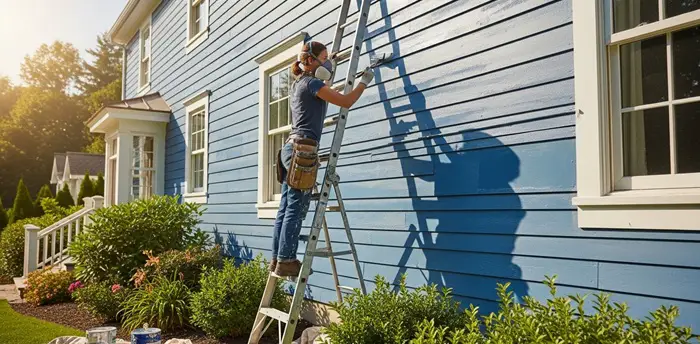
Sunlight is relentless. Rain is patient. Wind is unforgiving. And your wooden exterior? It takes the hit every single day.
If you’ve ever stepped back to admire your freshly painted home—only to see it chalky, dull, or uneven a few summers later—you already know that not all paints are created equal.
The real enemy isn’t just peeling. It’s fading.
UV radiation breaks down binders and pigments, moisture creeps into wood fibers, and temperature swings expand and contract the surface until the finish gives up.
Choosing the best fade resistant exterior paint isn’t about picking a popular brand off the shelf. It’s about understanding resin chemistry, pigment stability, film thickness, and how coatings perform over time on wood substrates.
In this guide, I’ll walk you through the 7 highest-rated, durable exterior paint for wood options trusted by professionals across the U.S., plus the technical factors that separate a short-lived finish from one that holds its color for a decade or more.
Let’s dive in.
7 Best Fade-Resistant Exterior Paints for Wood
Exterior wood is a versatile, durable, and visually appealing material widely used in construction and landscaping to add warmth and character to outdoor spaces.
Selected for its resistance to moisture, decay, and insects, it performs well in harsh weather conditions.
In structural applications, exterior wood is commonly used for decking on verandas, porches, balconies, and patios; siding and cladding for a natural wall finish; cedar shakes and shingles for roofing; fencing and gates for privacy and security; and structural framing elements such as beams, joists, and roof trusses.
Beyond structural uses, exterior wood plays a key role in landscaping and outdoor design.
It is used to build garden features like gazebos, pergolas, sheds, and greenhouses, as well as practical elements such as raised beds, planters, and retaining walls.
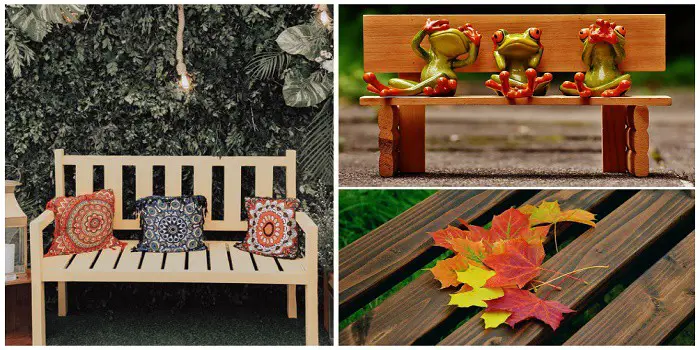
Additionally, it is a popular choice for outdoor furniture, including tables, chairs, benches, and loungers, combining durability with timeless aesthetic appeal.
Below are professional-grade paints known for UV resistance, color retention, adhesion strength, and long-term durability on wood surfaces.
1. Sherwin-Williams Duration Exterior Acrylic Latex
A contractor favorite for a reason.
Sherwin-Williams Duration uses advanced acrylic resin technology that creates a thicker, more elastic film.
That elasticity is critical for wood, which expands and contracts with humidity and temperature changes. Instead of cracking under stress, the coating flexes.
Why does it resist fading:
- High-quality acrylic binders
- Strong UV-resistant pigments
- Excellent film build per coat
It’s particularly effective on exterior wood siding where direct sunlight exposure is intense. Coverage averages 250–300 sq. ft. per gallon, and in many cases, one coat is sufficient over a properly primed surface.
Best for: Long-term color retention in harsh climates.
2. Benjamin Moore Aura Exterior
If color depth matters to you, Aura is hard to beat.
Benjamin Moore’s proprietary Color Lock® technology binds pigments tightly within the resin matrix, preventing premature breakdown from UV exposure. The result? Rich, saturated color that stays vibrant longer.
It’s often considered the best quality exterior wood paint for bold or deep shades, which tend to fade faster if poorly formulated.
Standout features:
- Exceptional color retention
- Mildew-resistant coating
- Low-temperature application capability (down to 35°F)
Ideal for homeowners investing in premium finishes for upscale projects.
3. Behr Marquee Exterior
Behr Marquee is known for its one-coat coverage claims—but beyond that, it offers impressive UV protection for residential use.
It forms a dense protective layer that resists chalking and discoloration, making it a solid choice if you’re searching for a best durable exterior paint that balances performance and accessibility.
It performs well on properly prepared exterior paint for wood siding applications, especially when paired with a quality primer.
Best for: DIY homeowners wanting high-end durability without contractor pricing.
4. PPG Permanizer Exterior Acrylic Latex
PPG Permanizer was engineered with 100% acrylic resin and built-in UV absorbers to combat fading.
What sets it apart is its resistance to chalking and dirt pickup. Over time, cheaper paints oxidize and leave a powdery surface—this one resists that breakdown.
Technical strengths:
- Advanced dirt-shedding technology
- Strong adhesion to wood fibers
- Mildew-resistant additives
If you’re repainting aging wood siding that has already seen years of weathering, this is a strong contender for the best paint for wood siding projects.
5. Valspar Duramax Exterior Paint + Primer
Duramax combines primer and paint in one formulation and uses FlexShield365® Technology to create a flexible, crack-resistant film.
Wood is dynamic. It moves. A rigid coating fails faster. Duramax adapts to seasonal movement while maintaining color integrity.
It works especially well as an outdoor paint for wood structures like fences, sheds, and trim where expansion stress is common.
Best for: Budget-friendly durability with strong UV resistance.
6. Dunn-Edwards Evershield Exterior
A favorite in high-sun regions like the Southwest.
Evershield is formulated with high-performance acrylic resins and fade-resistant pigments designed for extreme UV environments. If your home gets intense direct sun exposure for most of the day, this paint is engineered for that challenge.
It’s often selected for homes with lighter shades, including the best exterior white paint colors, because whites can yellow or dull without proper UV stabilization.
Best for: Homes in hot, sunny climates.
7. Farrow & Ball Exterior Eggshell
This one leans premium and aesthetic-focused.
Farrow & Ball Exterior Eggshell is breathable yet water-resistant, allowing moisture vapor to escape while protecting wood fibers. That breathability reduces blistering and long-term paint failure.
While not marketed purely on durability claims, it performs exceptionally well when applied over properly primed wood surfaces.
Best for: Architectural homes where color nuance and finish quality matter as much as durability.
| Paint Brand | Resin Type | Ideal For |
|---|---|---|
| Sherwin-Williams Duration | 100% Acrylic | Full siding |
| Benjamin Moore Aura | Advanced Acrylic | Deep colors |
| Behr Marquee | Acrylic Latex | DIY projects |
| PPG Permanizer | 100% Acrylic | Aging wood |
| Valspar Duramax | Acrylic + Primer | Trim & fences |
| Dunn-Edwards Evershield | High-performance Acrylic | High-UV zones |
| Farrow & Ball Exterior Eggshell | Water-based resin | Premium homes |
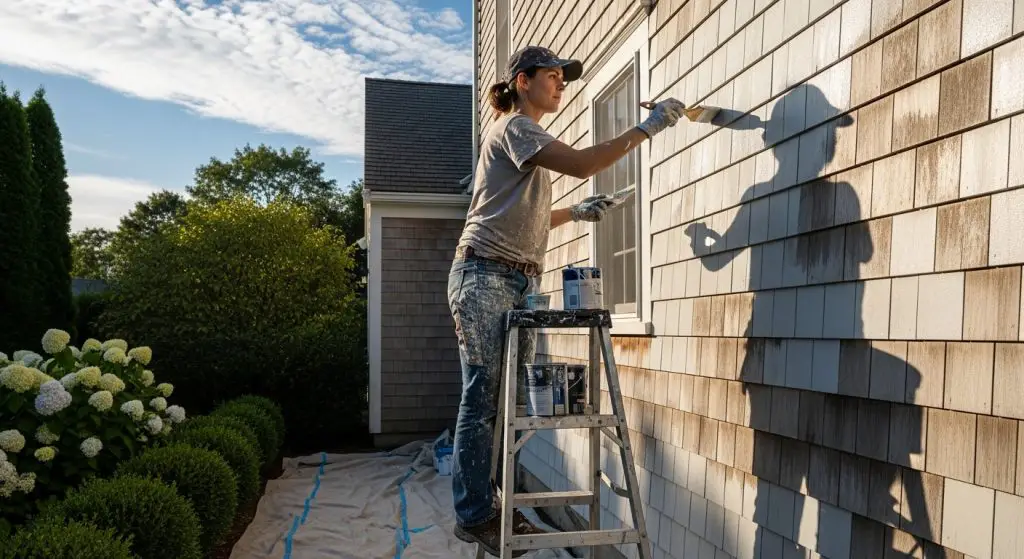
Factors to Consider Before You Choose the Exterior Paint for Wood
Choosing the right paint for wood exteriors isn’t just about color swatches—it’s about performance, chemistry, and long-term protection.
Below are five key factors explained in detail to help you select a coating that truly lasts.
1. Resin Type and Paint Composition
The resin (or binder) is the backbone of any paint. For exterior wood, 100% acrylic latex is widely considered the gold standard.
Acrylic resins offer superior flexibility, adhesion, and UV resistance compared to vinyl-acrylic blends.
Wood naturally expands and contracts with moisture and temperature changes, so a flexible coating prevents cracking and premature failure.
If you’re investing in a durable exterior paint for wood, always read the technical data sheet—not just the front label. The resin system determines how well the paint resists fading, peeling, and chalking over time.
2. Climate and Environmental Exposure
Your local climate plays a major role in paint longevity. In high-UV regions, sunlight can break down pigments and binders quickly, causing noticeable fading.
Coastal homes deal with salt air and humidity, which can accelerate mildew growth and corrosion around fasteners. Cold climates bring freeze-thaw cycles that stress the paint film as moisture enters and exits wood fibers.
Before selecting an exterior house paint, evaluate how much direct sun, rainfall, humidity, and temperature fluctuation your home experiences. The more extreme the environment, the more advanced the formulation should be.
3. Sheen Level and Finish Selection
The sheen you choose impacts both aesthetics and durability. Flat finishes hide surface imperfections but are more porous and prone to dirt retention.
Gloss finishes are highly washable and moisture-resistant, but can highlight wood grain inconsistencies and surface flaws. For most wood siding applications, satin or low-luster is the recommended exterior paint finish.
It offers a balanced combination of washability, UV resistance, and subtle sheen without emphasizing imperfections. Selecting the right finish ensures both visual appeal and long-term performance.
4. Surface Condition and Preparation Requirements
Even the best paint will fail if applied over poorly prepared wood. Check for rot, loose boards, peeling paint, and moisture damage before repainting.
Bare wood typically requires a quality exterior primer to seal tannins and improve adhesion. Previously painted surfaces must be cleaned, scraped, and lightly sanded to create a stable base.
If you’re applying exterior paint for wood siding, preparation often determines whether the coating lasts five years or ten. Investing time in prep work dramatically increases durability and fade resistance.
5. Color Choice and Pigment Stability
Not all colors fade at the same rate. Dark and highly saturated shades contain organic pigments that may degrade faster under UV exposure.
Lighter colors—especially whites with high titanium dioxide content—generally offer better long-term color retention.
However, whites can show dirt and mildew more easily, particularly on exterior wood siding.
When selecting among the best exterior white paint colors or bold accent shades, consider both aesthetic goals and how much sun exposure the surface receives.
Choosing high-quality pigments improves fade resistance and overall coating stability.
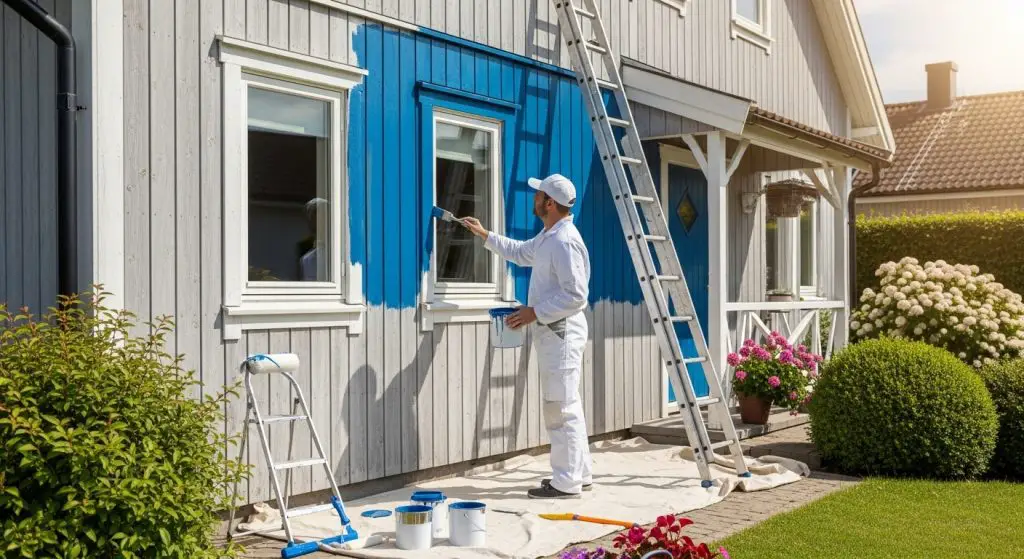
Exterior Paint for Wood – Applications and Maintenance Tips for Durability
A high-performance coating can only do so much on its own. The real secret to long-lasting results lies in how you apply it—and how you maintain it afterward.
Below are three essential sections that determine whether your exterior paint job lasts five years… or pushes past ten.
Proper application techniques for maximum adhesion
Application is where chemistry meets craftsmanship. Even the best paint won’t perform if applied incorrectly.
Start by ensuring the wood moisture content is below 15%—painting damp wood traps moisture and leads to blistering. Always prime bare wood to seal pores and prevent tannin bleed, especially with cedar or redwood.
Apply paint in temperatures between 50°F and 85°F, avoiding direct midday sun that can cause premature drying and poor leveling.
Maintain consistent film thickness—too thin reduces protection, too thick can crack over time.
For large siding areas, spraying followed by back-brushing helps work the paint into the wood grain, improving adhesion and long-term durability.
Choosing the right finish and layering strategy
Durability isn’t just about brand—it’s about system layering. A complete system includes primer plus one or two finish coats, depending on manufacturer specifications.
Satin or low-luster finishes are typically preferred for wood exteriors because they balance washability and flexibility without overemphasizing surface flaws.
Dark colors may require additional coats to achieve proper coverage and UV resistance. Pay attention to recoat times; rushing the process can trap solvents and weaken the paint film.
When applied in proper layers, a quality exterior coating forms a protective barrier against UV radiation, moisture intrusion, and temperature fluctuations.
Ongoing maintenance to extend paint life
Exterior paint isn’t “set it and forget it.” Annual light cleaning with a garden hose or mild detergent prevents dirt buildup that can degrade the finish.
Inspect caulking around joints, windows, and trim—failed caulk allows water infiltration behind the paint layer. Address small chips or cracks quickly to prevent exposed wood from absorbing moisture.
Trim back shrubs and trees to improve airflow and reduce mildew growth. With proactive care, even standard exterior paint can exceed its expected lifespan, and premium coatings can maintain color and integrity for nearly a decade.
Related FAQs
What color to paint exterior wood?
Choose a color that complements your home’s architecture, surroundings, and long-term maintenance expectations.
Lighter shades, including many of the best exterior white paint colors, reflect more sunlight and typically fade less than darker hues.
Earthy neutrals, soft grays, and warm whites remain popular for resale value. Also, consider how the color looks in full sun versus shade before committing.
How long should exterior paint last on wood?
High-quality 100% acrylic exterior paint applied over properly prepared wood should last 8–10 years in moderate climates.
Harsh sun, humidity, or freeze-thaw cycles can reduce that lifespan to 5–7 years.
Regular cleaning, prompt touch-ups, and proper caulking maintenance significantly extend durability and help preserve color retention.
What is the best paint for wood siding in high-sun areas?
In high-UV regions, choose a 100% acrylic formula specifically engineered for intense sunlight exposure. Paints with UV-resistant pigments and fade-resistant technology perform best.
Look for professional-grade options often labeled as the best fade-resistant exterior paint, designed to resist chalking, cracking, and color breakdown under prolonged sun exposure.
Final Thoughts
Fading isn’t just cosmetic—it’s a sign that the protective barrier over your wood is breaking down.
Choosing the right paint means understanding what’s happening at a microscopic level: UV radiation degrading binders, moisture cycling within wood fibers, and temperature stress testing the coating daily.
Investing in the best durable exterior paint today saves you from repainting years earlier than expected.
And when paired with proper surface preparation and maintenance, your home’s exterior can hold its color, depth, and character far longer than average. Because in the battle between sun and siding, chemistry wins.
Choose wisely—and let your paint do the heavy lifting for the next decade.

We are constantly finding new ways to update our home exteriors. If you are a bit tight on budget, renovating Read more
Cypress wood has been used for thousands of years in shipbuilding, so it is well-known for its water-resistance properties. Due Read more
We all know - Heat is the enemy of wood. When you place a hot item on a wooden surface Read more
If you are looking to upgrade your dining room but are on a budget, then painting your oak table and Read more
Hi, I am Mark Garner a professional carpenter, woodworker, and DIY painter. I live in the small city of Peoria, Arizona as a semi-retired woodworker. I have started this blog with a simple motive to help you with my wood experience in this sector. If you like to know more about what I love doing and how it all got started, you can check more about me here.