Walk into a home that feels calm, alive, and quietly energizing, and chances are the Feng Shui wood element is doing some heavy lifting behind the scenes.
Wood is the element of growth, renewal, and upward movement—the invisible force that makes a space feel hopeful rather than heavy.
In Feng Shui, decorating isn’t just about what looks good on Instagram. It’s about how your environment behaves.
The wood element governs how ideas grow, how health regenerates, and how motivation flows through a home.
When balanced correctly, it can make a room feel fresh and optimistic; when neglected, spaces often feel stagnant or uninspiring.
This guide goes beyond surface-level décor tips.
We’ll unpack the meaning, colors, placements, and practical ways to bring the wood element into your home—without turning it into a forest-themed showroom.
Feng Shui Wood Elements and Meaning
To understand décor choices, we need to start with wood meaning in feng shui itself.
Wood represents:
- Growth and expansion
- Vitality and health
- Creativity and fresh starts
- Compassion, kindness, and flexibility
Among the five elements of feng shui—Wood, Fire, Earth, Metal, and Water—Wood is the initiator.
It’s the energy of springtime, new ideas, and forward momentum. Think of a sapling pushing through soil: patient, persistent, and powerful.
From a metaphysical standpoint, the wood element’s spiritual meaning is closely tied to personal evolution. It’s about becoming, not arriving.
This is why homes rich in Wood energy often feel supportive during transitions—career changes, recovery periods, or new family phases.
On a human level, Feng Shui also connects elements to behavioral tendencies.
A balanced wood element personality is typically optimistic, goal-oriented, generous, and resilient.
Too much Wood, however, can manifest as restlessness or impatience—another reason balance matters.
Wood Element and the Five Feng Shui Elements Relationship
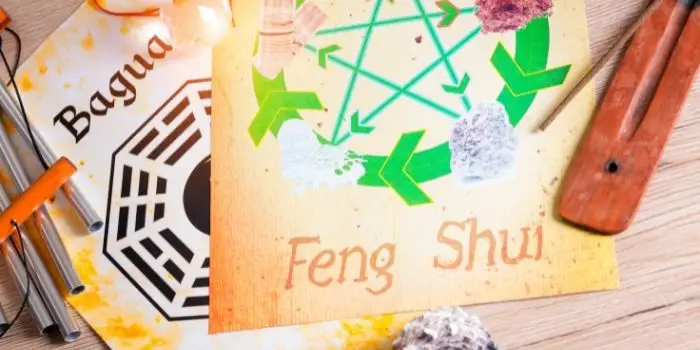
Within the five elements of feng shui, Wood sits at a critical junction:
- Water → feeds Wood
- Wood → fuels Fire
- Fire → creates Earth
- Earth → produces Metal
- Metal → controls Wood
This cycle explains why too much Metal décor (steel, sharp edges, gray dominance) can suppress growth energy in a home. Balance doesn’t mean equal—it means appropriate.
Importance of Feng Shui Wood Element Colors in the Home
Color is one of the fastest and most effective ways to activate Wood energy. You don’t need to renovate; sometimes, a few strategic color shifts are enough.
Primary Wood Element Colors
The most direct feng shui wood element colors are:
- Green (all shades, from sage to emerald)
- Brown (especially warm, natural wood tones)
Green symbolizes life force and renewal, while brown grounds that growth in stability and reliability.
Since Water nourishes Wood in Feng Shui theory, these colors also help:
- Blue
- Teal
- Soft charcoal
Used thoughtfully, they enhance Wood energy without overpowering it.
Where Wood Colors Work Best?
Wood element colors are especially effective in:
- Living rooms (family harmony, shared growth)
- Home offices (career development, creativity)
- Bedrooms (gentle renewal and emotional balance)
Avoid oversaturating small or low-light rooms with dark greens or heavy browns, as Wood energy still needs “space to grow.”
Wood Element Colors, Meanings, and Best Uses
| Color Shade | Feng Shui Effect | Best Rooms | Design Tip |
|---|---|---|---|
| Sage Green | Calm growth, healing | Bedroom, bathroom | Pair with white or beige |
| Emerald Green | Ambition, vitality | Living room, office | Use as accent walls |
| Olive Green | Stability, balance | Dining room | Works well with brass |
| Warm Brown | Grounded growth | Any room | Choose natural finishes |
| Teal / Blue-Green | Nourishing support | Office, study | Limit to accents |
How to Use Wood Elements in Feng Shui for My Home Décor?
Bringing the wood element in feng shui into your home isn’t about piling on wooden furniture. It’s about expression.
Below are 7 effective, flexible ways to do it right.
1. Use Natural Wood Furniture (But Let It Breathe)
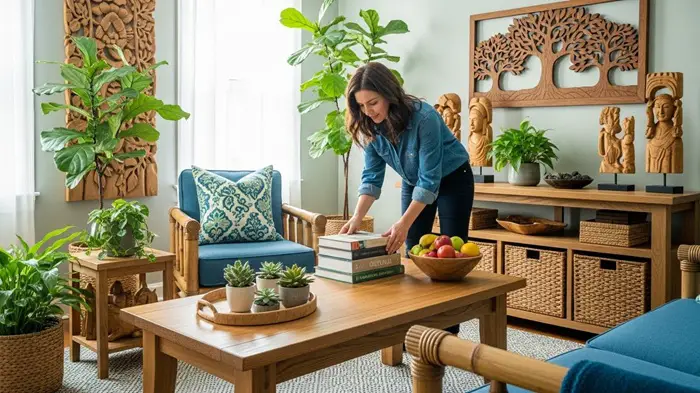
Solid wood furniture—oak, maple, walnut, bamboo—is the most literal expression of Wood energy. Look for visible grain patterns; they symbolize organic growth.
Pro tip: Avoid overcrowding. Wood energy needs openness to expand. One well-placed wooden dining table does more than five cramped shelves.
2. Decorate with Living Plants (The Purest Form of Wood)
Nothing activates Wood energy like living plants. They grow, adapt, and respond—exactly what Wood symbolizes.
Best Feng Shui plants:
- Areca palm
- Money plant (pothos)
- Rubber plant
- Fiddle-leaf fig (in moderation)
Skip thorny or dried plants. Feng Shui favors vitality, not survival mode.
3. Choose Vertical Lines and Upward Forms
Wood energy moves upward. Tall bookcases, vertical wall panels, floor lamps, and elongated artwork subtly reinforce growth and progress.
This is especially useful in:
- Home offices (career momentum)
- Entryways (positive first impressions)
4. Incorporate Wood Through Textures, Not Just Materials
You don’t need everything to be solid wood. Textiles and finishes can carry Wood energy too:
- Linen and cotton fabrics
- Woven baskets
- Wood-grain laminates
- Natural fiber rugs
These options are budget-friendly and visually lighter—perfect for apartments or modern homes.
5. Use Artwork That Represents Growth and Nature
Art influences subconscious energy. Choose imagery that aligns with Wood symbolism:
- Forests, trees, leaves
- Sunlight through greenery
- Abstract upward motion
Avoid barren landscapes or dead trees; they counteract the growth narrative.
6. Balance Wood with Other Feng Shui Elements
This is where many people go wrong. Wood thrives on balance, not dominance.
- Pair Wood with Water for nourishment
- Add Fire (warm lighting) to prevent stagnation
- Use Metal sparingly to maintain structure
Understanding the 5 elements of feng shui helps you avoid creating an overgrown, chaotic space.
7. Apply Feng Shui Element Identification Room by Room
Not every room needs the same elemental focus. Proper feng shui element identification ensures Wood energy shows up where it’s most beneficial.
- East-facing rooms → Strong Wood focus
- Southeast areas → Wealth and abundance (Wood + Water)
- Bathrooms → Subtle Wood accents only
This targeted approach keeps your décor intentional rather than decorative clutter.
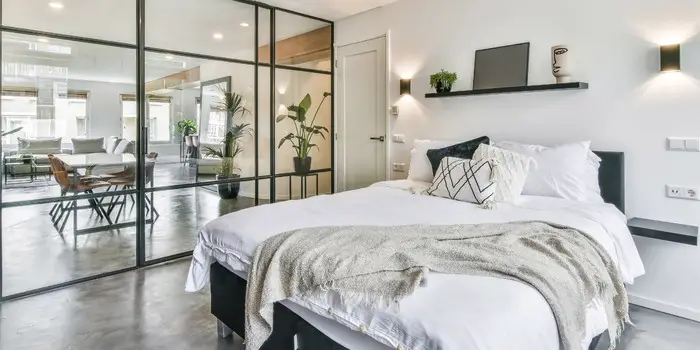
How Do I Feng Shui My Bedroom and Use Wooden Elements for Good Luck?
Feng shui is the Chinese practice of harnessing positive energy through element balancing, placement, and orientation.
The goal is to allow wind and water forces to flow freely throughout a space, unencumbered by obstacles that might block or corrupt positive energy flow.
Bedroom furniture layout is essential in feng shui because it affects the direction your body will face while you sleep, which can influence your health and luck.
Don’t think of it in terms of energy, but how it affects your emotions.
You’ll understand better as we go through each rule and explain its rationale. It balances the five elements: wood, fire, earth, metal, and water.
Let’s get into bedroom feng shui rules, ideas and layout right away, explain the logic behind them and illustrate how they work with some ideas…
1. Make the bedroom door visible
This means the door should not be blocked when you are in bed. Blocking the door is said to block good energy or opportunities from coming into your life.
You might be wondering which way is best to place your bed in relation to your bedroom door.
I believe it’s better to have the foot of your bed facing the door so that there’s more distance between you and any potential intruder.
This also allows for more reaction time if something were to happen.
However, some people choose to have their bed placed in a “commanding position,” with the side of the bed perpendicular to the doorway, so they can see everything happening in the room at once.
Only do this if it doesn’t bother you mentally. Otherwise, the ideal placement for your bed is near the foot of the door, and it’s better still if it’s aligned with the door. This makes you feel calm by reducing feelings of danger.
2. Put up only the calming artwork
Keep your artwork simple and calming. Anything too busy or loud will work negatively against promoting a good night’s sleep.
Consider prints of paintings with muted colors or serene landscapes. This balances your life force by generating positive energy in the room where you rest at night.
Unless you have more than one piece of art, don’t put it over the headboard of your bed. It’s okay if you have several pieces of art, but your most prominent wall art should be on the unbroken wall across from where your bed ends.
This is, so you see it as soon as you wake up and begin your day with a peaceful state of mind.
A feng shui consultant will say it’s also the last thing you see before falling asleep at night – but we all know that these days, that spot is either occupied by a book or our cellphones, which goes against another rule.
3- Use natural light, scented candles & incense
The moon and the sun are potent chi stimulants. They assist you in maintaining your circadian rhythm, melatonin levels, and energy levels throughout the day.
You desire any window curtains to be instantly opened and closed, as well as for your window to face away from your bed.
If the window is behind or at the foot of the bed, you won’t get much light; if it’s at the head of your bed, you’ll receive too much light when sleeping.
It’s also essential that you do not cover your window with a dresser or your headboard. You want it to be visible and functional.
Opening your window in the morning and evening can allow fresh air and chi to enter.
Also, fresh, chilly air with natural odors in the evening will put you to sleep quickly, giving you a restful night’s sleep. So it’s also a good idea to use scents.
Auspicious fragrances repel harmful energies and make you feel calm and at ease. Also, they disguise unpleasant odors such as a clothes hamper or a cat litter box.
You may utilize these scented candle options to complement the ambiance you’ve created with your color scheme.
There are many benefits to burning candles in your home. Candles can bring romance and calmness to meditation and provide some fire energy to balance the chi.
They can also provide dimmed lighting as needed. If you’re into incense, that’s a great choice too!
4- Reduce clutter and no electronics, please
Clutter obstructs the free circulation of life energy and is psychologically distressing. Consider minimalist design as you decorate and arrange your bedroom to get started on the correct track.
It’s soothing to fill a room with things you enjoy and are familiar with. This tends to aid in creating a space that feels yours solely.
However, in a bedroom, you want spaciousness without distractions so you may engage with it.
You’re aiming for reduced excitability and increased necessary relaxation. Cluttering makes life difficult; clutter-free living is the way to go. Extra novels, cushions, nightstands, and other items fall into this category.
Furthermore, only light should be allowed in your bedroom – no electronics. If you can avoid lamps, that’s even better. Not everyone has large enough windows pointing in the right direction, though.
You may be wondering why such a stringent rule. Well, electric lighting generates artificial light. Digital alarm clocks have blinking lights, as well as other sorts of clocks.
They all produce electromagnetic fields that may disrupt the flow of Chi. They also prevent your room from reaching its optimum level of darkness, affecting your sleep cycle.
5- Avoid sharp corners and large mirrors – use rounded furniture
You’ll have to decide whether this matters to you.
It does not bother me, but the idea is that chi has a more challenging time flowing around corners than it does on rounded surfaces. As a man, I am personally drawn to the masculinity of dark-stained wood furniture pieces that have defined edges.
If you must have sharper angles, ensure they aren’t directed at your bed. They act much like poison arrows that splice the energy in those areas. In this instance, a round side table is superior to a square one.
Although, a square side table with routed and smooth edges that are rounded produces a more calming effect than one with no decorative edge features at all. This is primarily based on what allows your mind to settle and relax more.
Also, in the bedroom, it’s good to avoid oversized mirrors. The disadvantages of large types of mirrors in the bedroom, especially ceiling-to-floor mirrors, are many.
They create the impression that the space is twice as big, which violates all visual balance by duplicating the space.
According to feng shui beliefs, not only do mirrors attract chi, but they also push it away in the opposite direction. It generates too much movement, which implies activity and is therefore opposed to tranquility.
6- Don’t use plants in the bedroom
Now, this can be counterintuitive to what I said before, but it’s believed to be a bad Feng Shui when you use any indoor plants in the bedroom.
It’s OK to use them in other parts of your home, like the living room, but not the bedroom – it’s the opposite here.
The plant’s leaves absorb all the negative energy in your bedroom and then release it back into the room, which is not what you want.
If you love plants and can’t stand the idea of not having any in your bedroom, then some plants are better than others.
The best plants for the bedroom are Bamboo, Snake Plant, Orchids, and Jasmine.
These plants are known to filter out negative energy and replace it with positive energy.
Other than plants, you should also not use your bedroom for other purposes the whole day.
To keep a healthy balance of energy in your bedroom, only use it for activities related to sleeping and storing clothing.
This includes making your bed every morning and keeping clothes off the floor. By decluttering your space and ridding it of non-sleep items, you train your mind to relax more quickly in the bedroom, creating positive chi energy.
7. Don’t locate your bed beneath a ceiling fan or a beam
The idea is that you don’t want anything hovering over your head while you’re trying to sleep.
This includes things like ceiling fans, beams, or even a skylight. All these things can create an ominous feeling that weighs down on you while trying to relax and get some rest.
Instead, using a solid headboard on your bed is a great idea.
A headboard is not only a great way to add some style to your bedroom, but it also provides a feeling of stability and support. Plus, it gives you something to lean against while reading in bed.
FAQs – Feng Shui Wood Element
What is the main meaning in feng shui for wood?
Wood represents growth, vitality, and new beginnings. It governs health, creativity, and forward momentum in both homes and personal energy.
If you want to add wood energy to your home without wooden furniture, you can consider adding plants, green colors, vertical designs, and natural fabrics, as these all activate wood energy effectively.
Is green the only color for the Wood element?
No. While green is primary, brown and supportive water colors like blue also strengthen wood when used thoughtfully.
How do I know if my home needs more wood energy?
If spaces feel stagnant, uninspiring, or emotionally heavy, introducing wood elements often restores vitality and optimism.
Also, keep in mind that bathrooms and storage-heavy areas should use wood minimally, as excess growth energy can feel unbalanced there.
What are the common mistakes to avoid when using wood element décor?
Even well-intentioned Wood element décor can work against you if it’s overdone or poorly placed. One common mistake is overusing dark green shades in low-light rooms, which can make the space feel heavy or gloomy instead of fresh and uplifting.
Another issue is filling rooms with too many plants that aren’t well maintained—unhealthy or neglected plants symbolize stalled growth rather than vitality.
Excessive wooden furniture without contrast from other elements can also overwhelm a space, making it feel cluttered and energetically unbalanced.
Lastly, many people ignore room orientation and function, applying the Wood element uniformly throughout the home when each area actually has different energy needs.
Feng Shui works best when design choices are responsive to the space and its purpose, not rigidly applied by rule alone.
Final Thoughts
In feng shui, wood is represented by the color green. Green is associated with growth, new beginnings, and fertility.
Indoor plants are a common motif in feng shui because they embody the freshness and growth of springtime.
However, decorative items like sculptures and paintings can also represent wood elements.
No matter what elements you choose to incorporate into your space, the goal is to create a more harmonious environment that supports your well-being.
So, choose them wisely!
Share the post "Feng Shui Wood Element – Colors & Ideas for Home Decor"

Termites are recognized as one of the most troublesome pests all over the world. They are small and numerous and Read more
Our bedroom is a special place where we find relaxation and refresh after a hard day of toil - the Read more
Let’s be honest: buying a sofa is a bit like dating. In the beginning, it’s all about the looks. You Read more
Wooden furniture, trims, doors, and windows are so long-lasting that you can easily repair and reuse them even after they Read more
Hi, I am Mark Garner a professional carpenter, woodworker, and DIY painter. I live in the small city of Peoria, Arizona as a semi-retired woodworker. I have started this blog with a simple motive to help you with my wood experience in this sector. If you like to know more about what I love doing and how it all got started, you can check more about me here.